John Cooper's Rubber Powered Freeflight Page
Indoor Flying. I fly my indoor models with the Ottawa Indoor Model Flyers, in Ottawa, Canada.
Flying is on Monday Nights 7-10 pm at the Woodroffe High School
from mid-Sept to mid-May, with the exception of holidays.
Come out and watch or join in. I will be glad to help anyone wanting to get into freeflight.
2019-2020 Calendar
Freeflight Plans
Here is my fleet of indoor models:
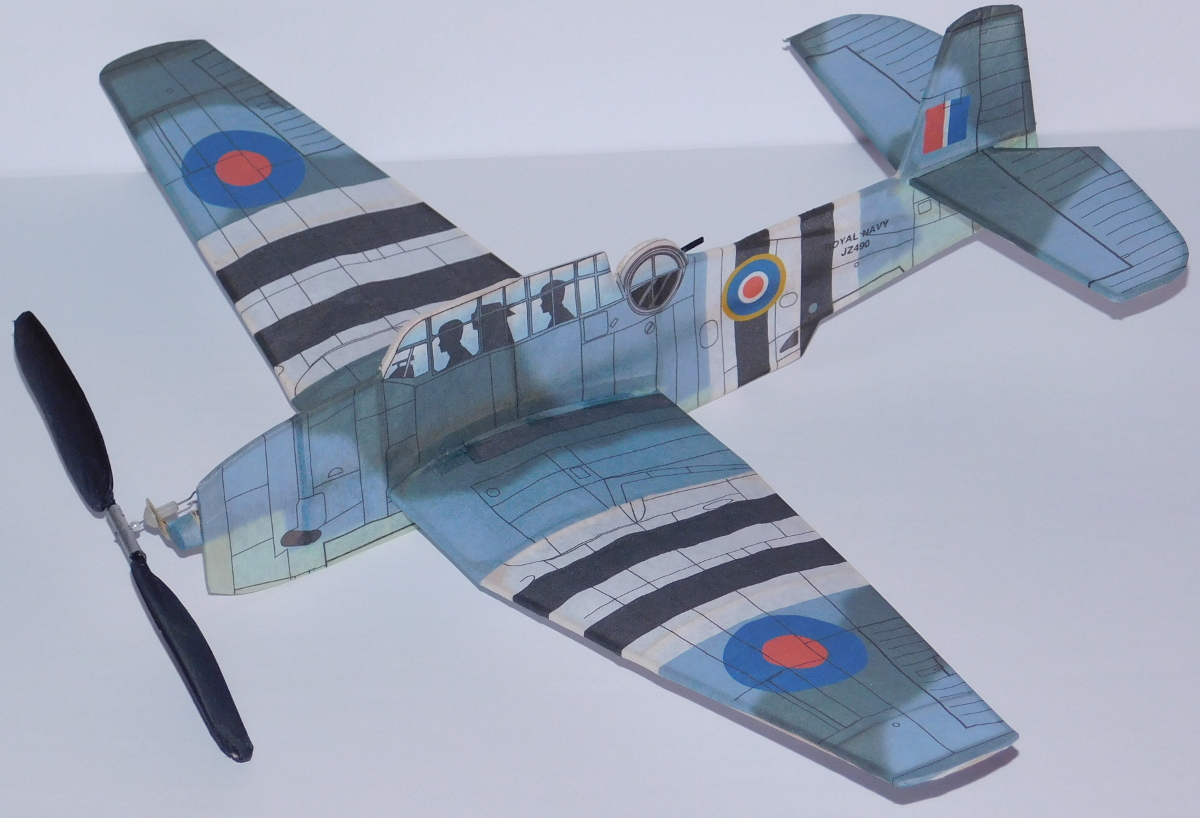
Grumman Avenger TBF No-Cal
Built for a local club contest, the model was capable of 1 min 30 sec flights. Unfortunately the light fragile tail was broken in competition and put me out of the running.. .No Video Yet
- wingspan: 40.6cm (16")
- weight: 6.1 g without rubber
- power: 1 strand of 1.8mm
- design: Paul Bradley
- built: 2018
----------------------- | |
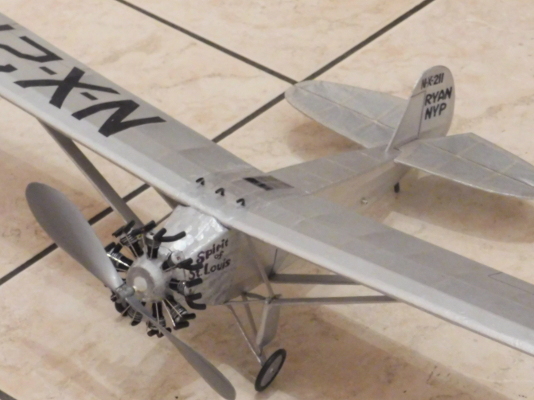
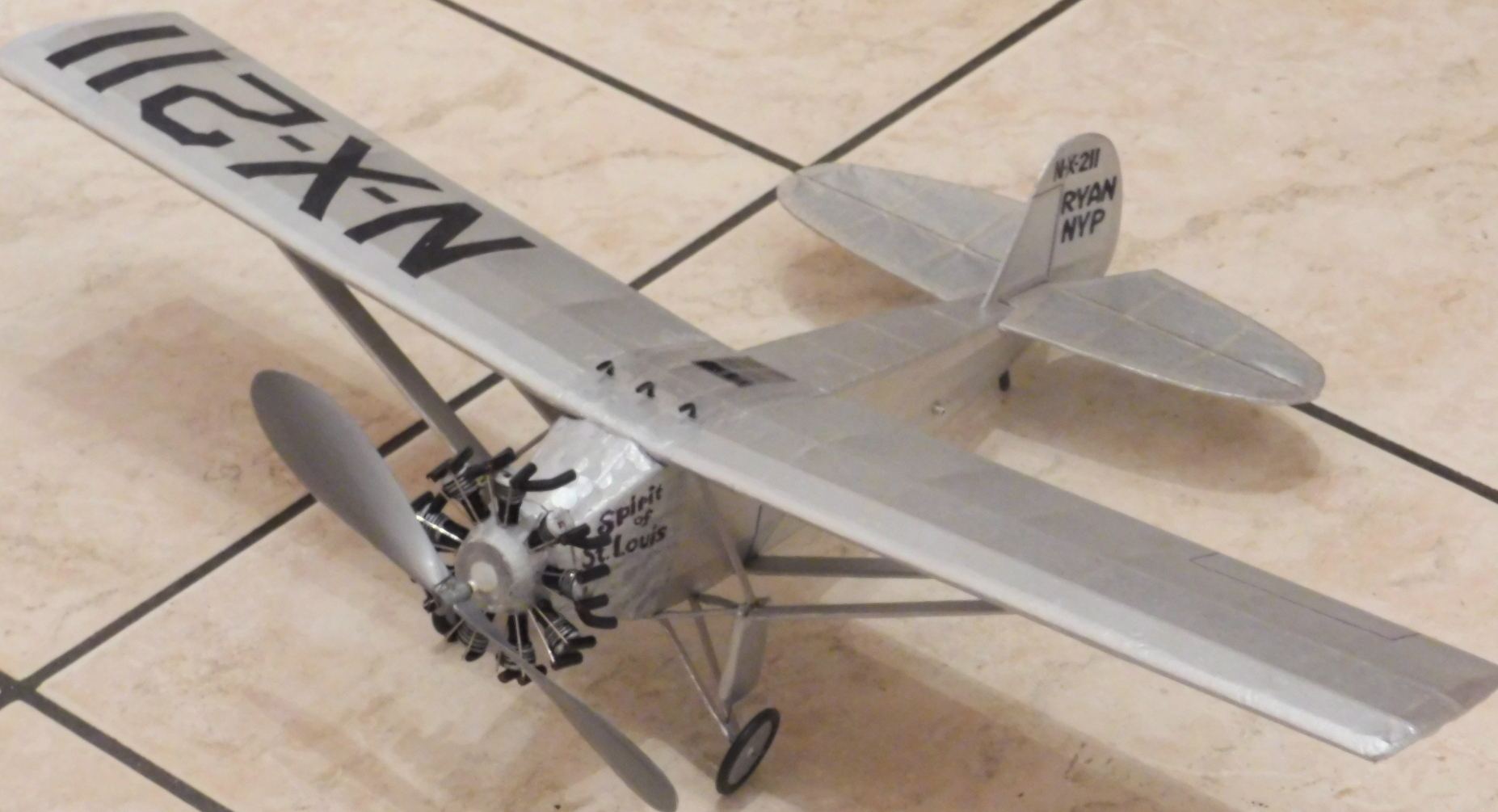
Dumas Spirit of St. Louis
A fairly heavy model with extra scale details, including a heavy fake radial engine. It took a lot of rubber to get it up.. .Video
- wingspan: 44.5cm (17.5")
- weight: 29 g without rubber
- power: 1 strand of 6mm
- design: Dumas
- built: 2018
----------------------- | |
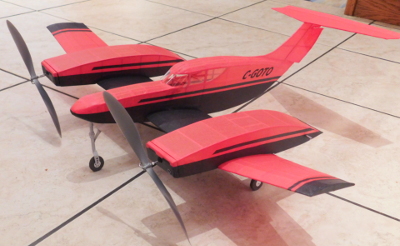
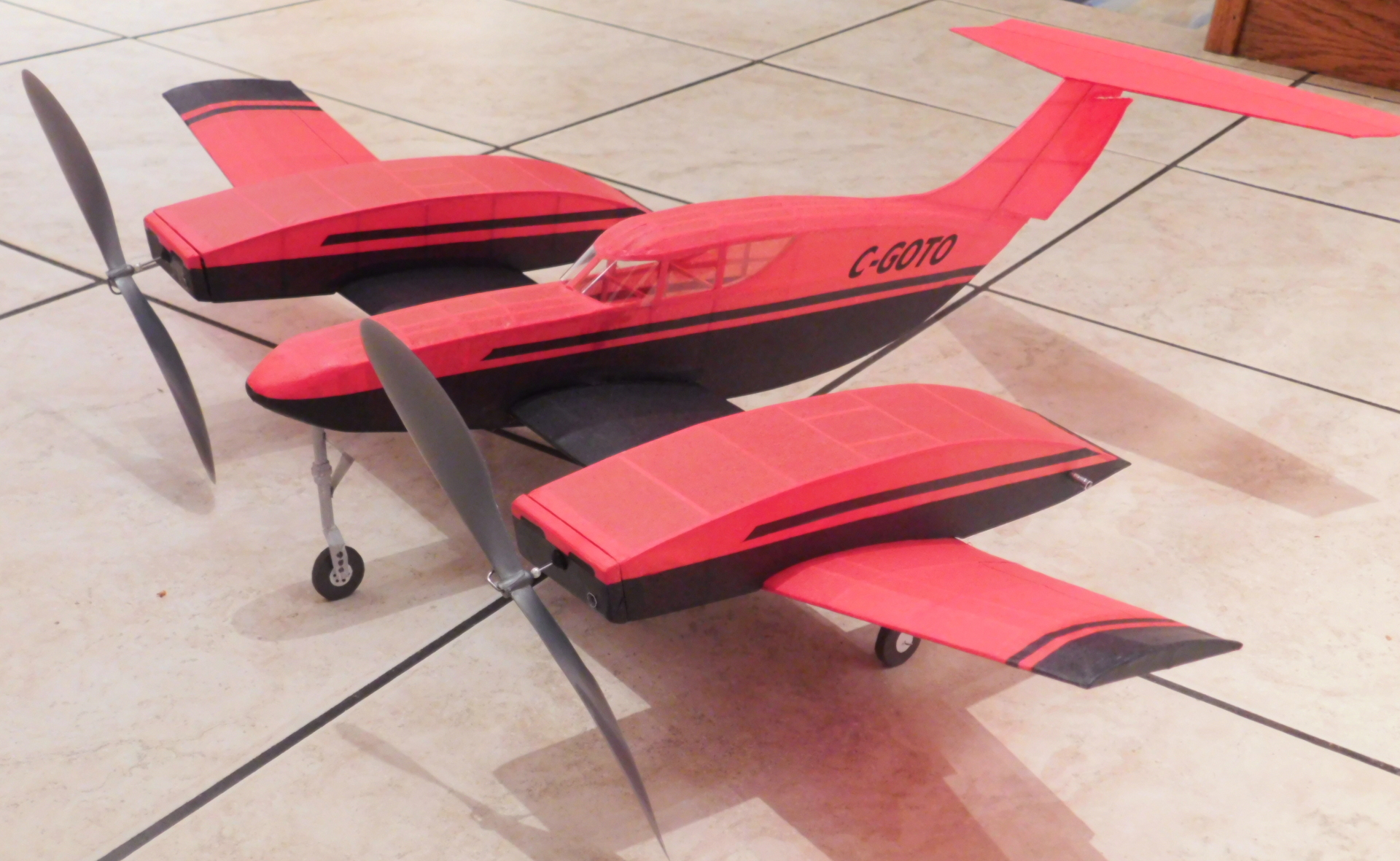
Go-Two Twin
This twin has 7 inch Peck props that turn in the same direction. I have found that props with the same direction tend to keep the model from wondering into walls.. .Video
- wingspan: 55.8cm (22")
- weight: 33.1 g without rubber
- power: 1 strand of 3.8mm per nacelle
- design: John Cooper
- built: 2018
----------------------- | |
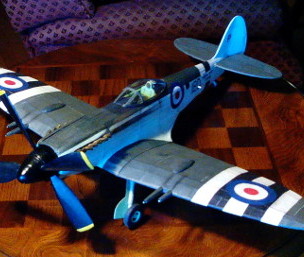
Supermarine Seafire Mk47
I finally built this contra-rotating coaxial prop Seafire, because I wanted to use a rubber geared system that I had been given years ago. The simple system consists of 4 identical nylon bevel gears. I am still trimming this model. The lack of prop torque doesn't seem to be helping. The plan is available at Outerzone (I made modifications to convert from Mk17 to Mk47).
- wingspan: 58.5cm (23")
- weight: 58 g without rubber
- power: 1 strand of 6.4mm (1/4")
- design: John Bell
- built: 2017
----------------------- |
|
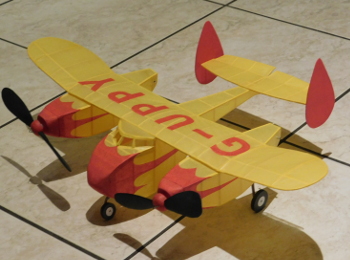
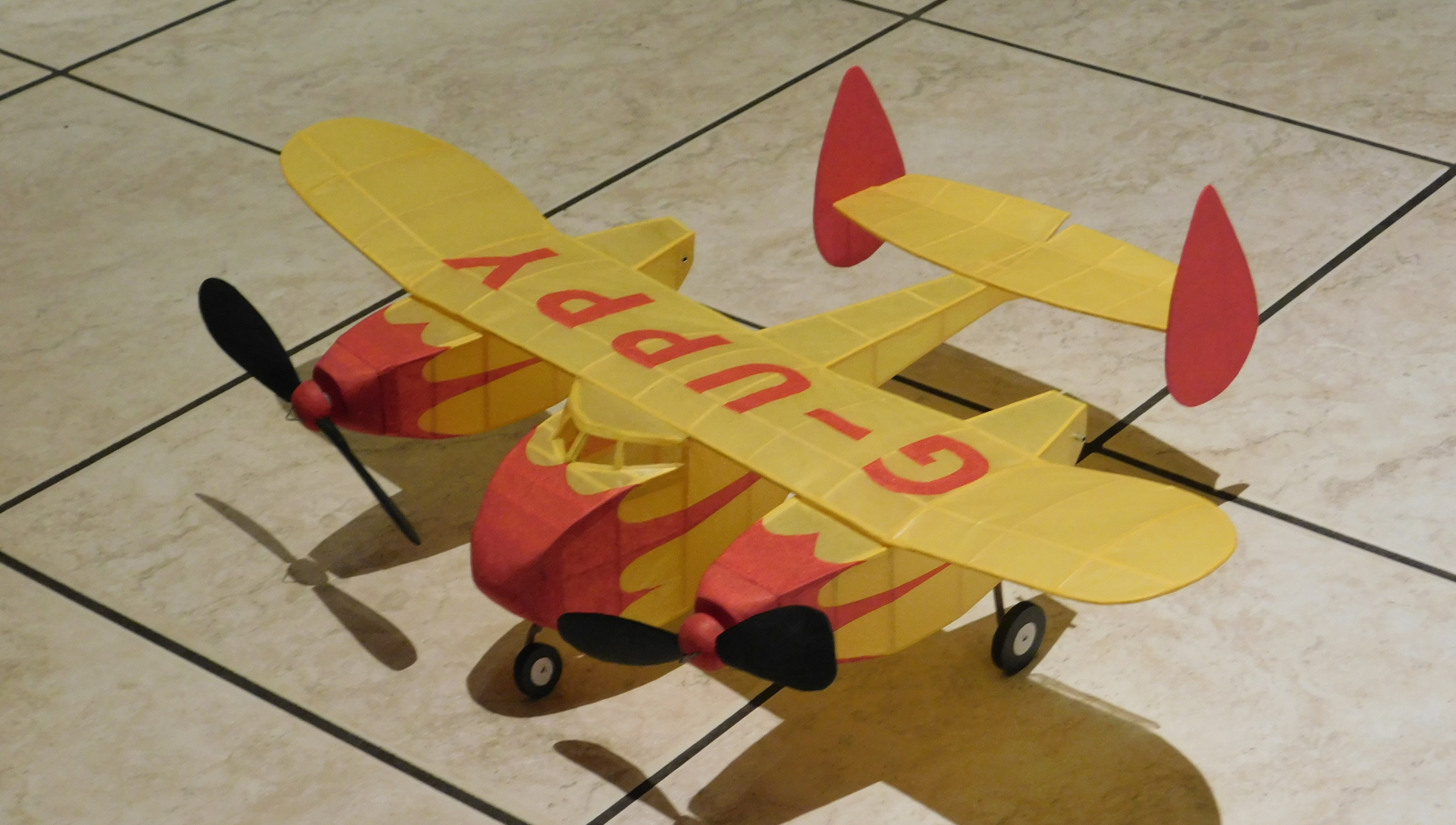
Double Guppy
This is not a scale model. I had a strange desire to build a whimiscal model with less than ideal proportions for flying. Despite this, it generally flies well, but, as can be seen in the video, asymmetrical rubber unwinding can lead to exciting flights.
Video
- wingspan: 45.7cm (18")
- weight: 19.5 g without rubber
- power: 2 x 1 strand of 4mm
- design: John Cooper
- built: 2017
----------------------- |
|
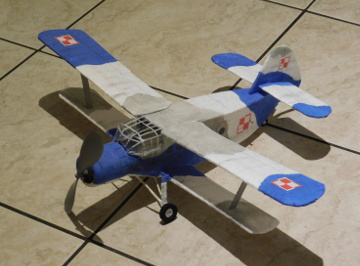
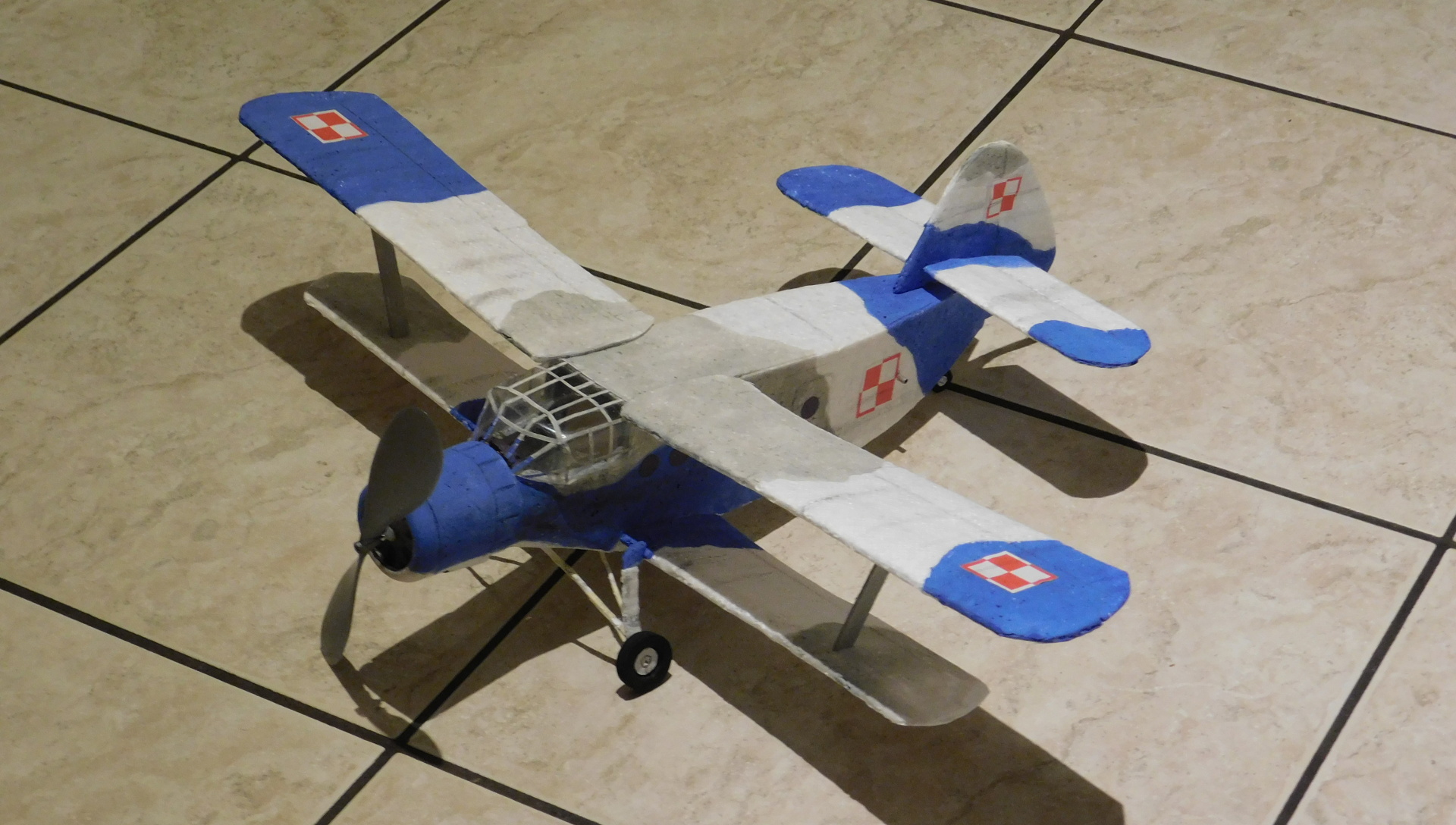
Antonov An-2
Yet another foam model from 2mm polystyrene. The foam lends itself to quick building and I slapped this one together rather quickly. Most of the cuts were made with scissors.
- wingspan: 50.8cm (20")
- weight: 30.6 g without rubber
- power: 1 strand of 5mm
- design: John Cooper
- built: 2017
----------------------- |
|
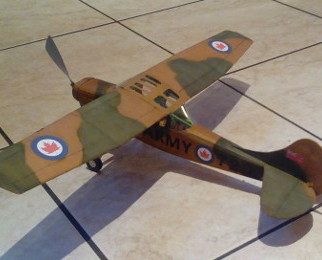
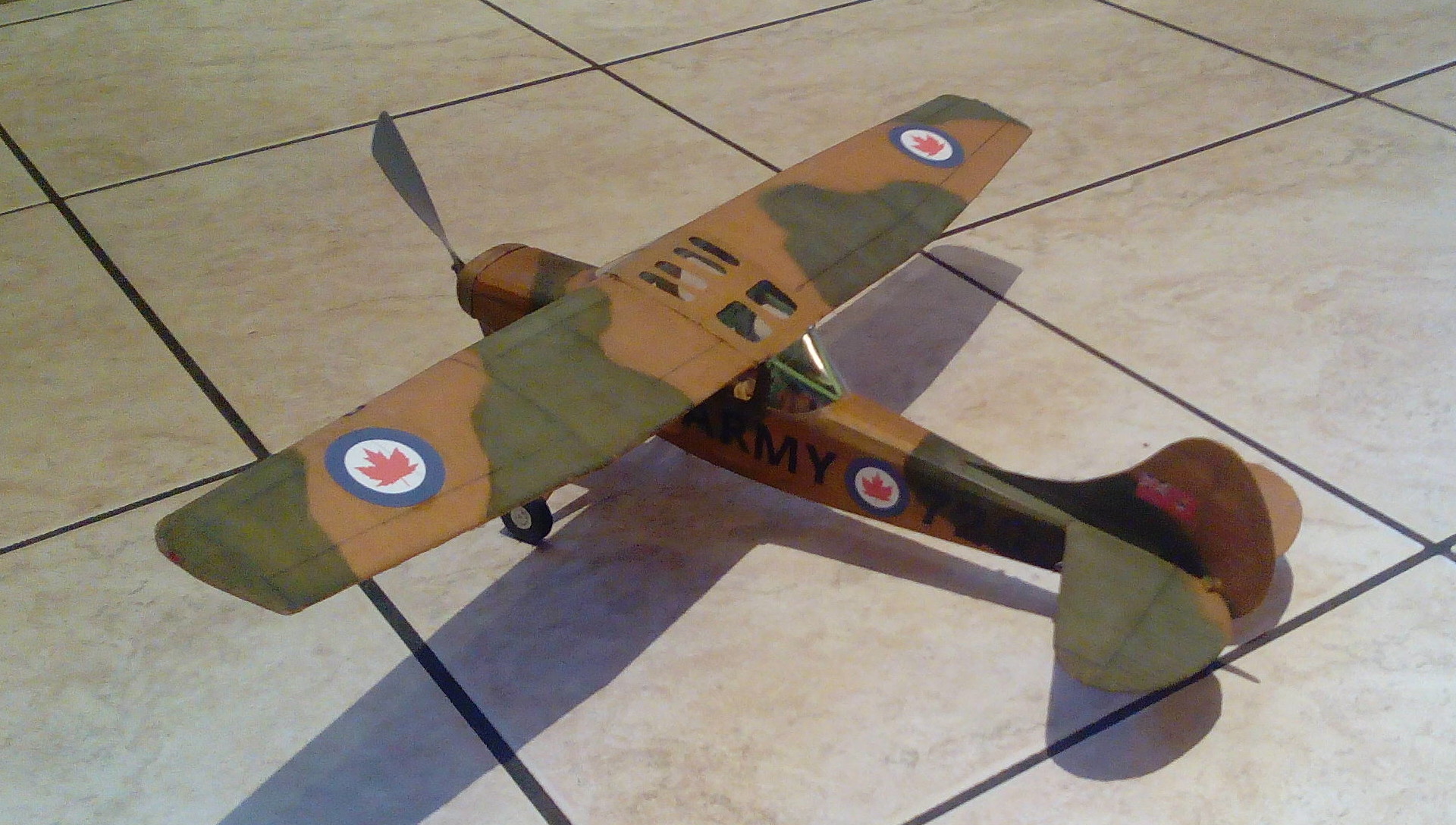
Guillows Cessna L-19 Bird Dog
This model was built for a club contest. I needed to ballast up a bit to meet the minimum contest weight. Despite being a little heavy it can fly 28 seconds, unfortunately not long enough to win the contest.
- wingspan: 45.7cm (18")
- weight: 24.5 g without rubber
- power: 1 strand of 4mm
- design: Guillows
- built: 2017
----------------------- |
|
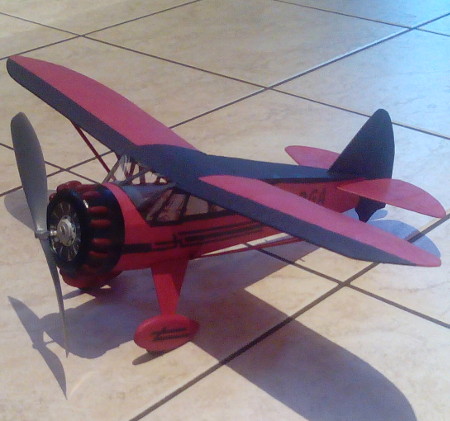
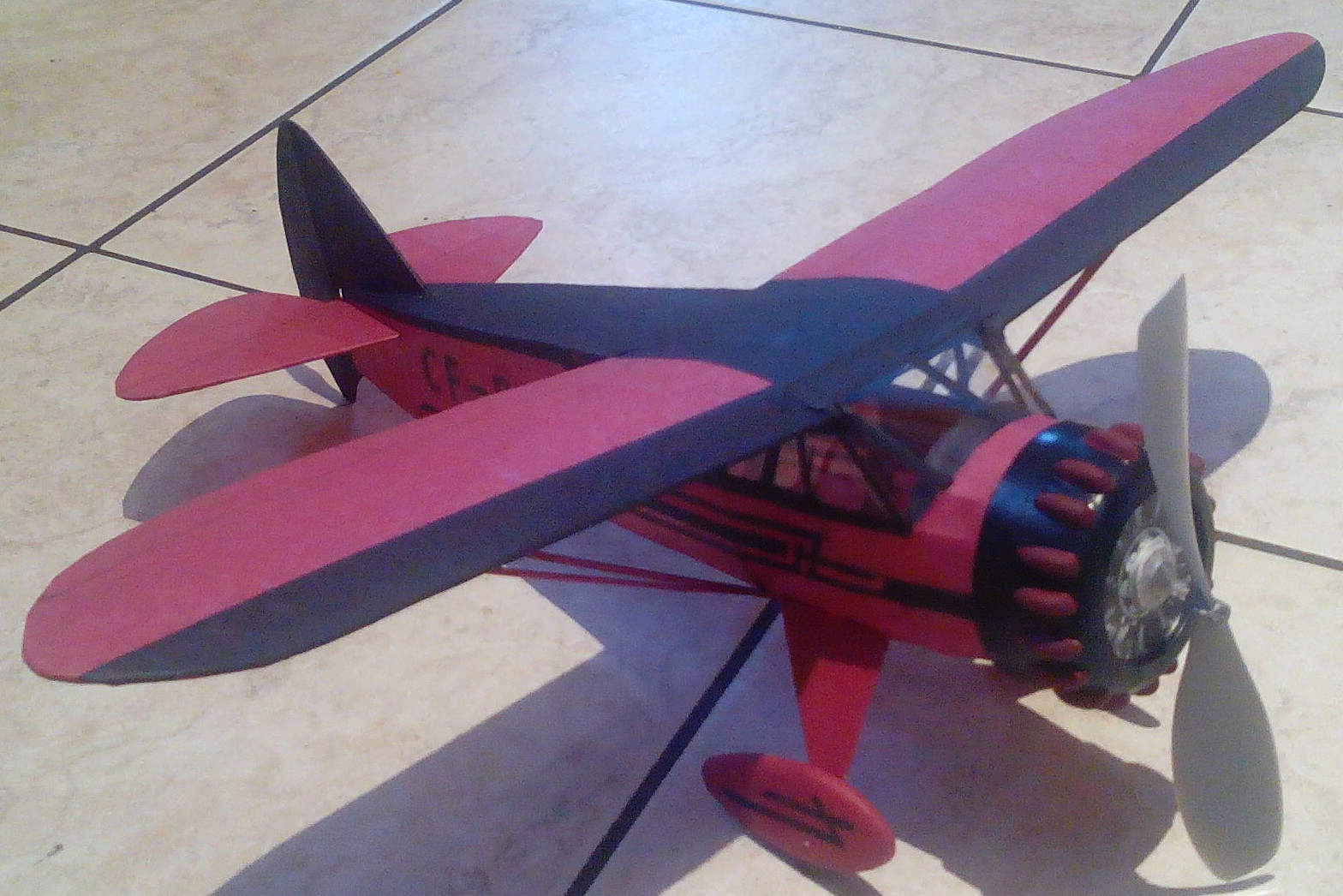
Dumas "Mister Mulligan"
Actually, the black and maroon paint scheme makes this a Howard DGA-21, not a Howard DGA-6 "Mister Mulligan". I went to a fair effort to reduce weight by substituting lighter thinner wood. The model finished quite nose heavy (good) but also slightly heavier than I wanted at 24.9g. Video
- wingspan: 44.5cm (17.5")
- weight: 24.9 g without rubber
- power: 1 strand of 4mm
- design: Dumas
- built: 2017
----------------------- |
|
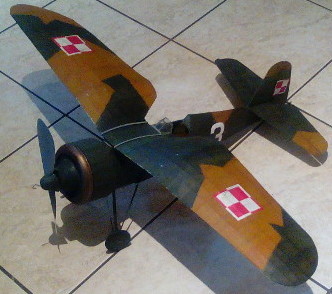
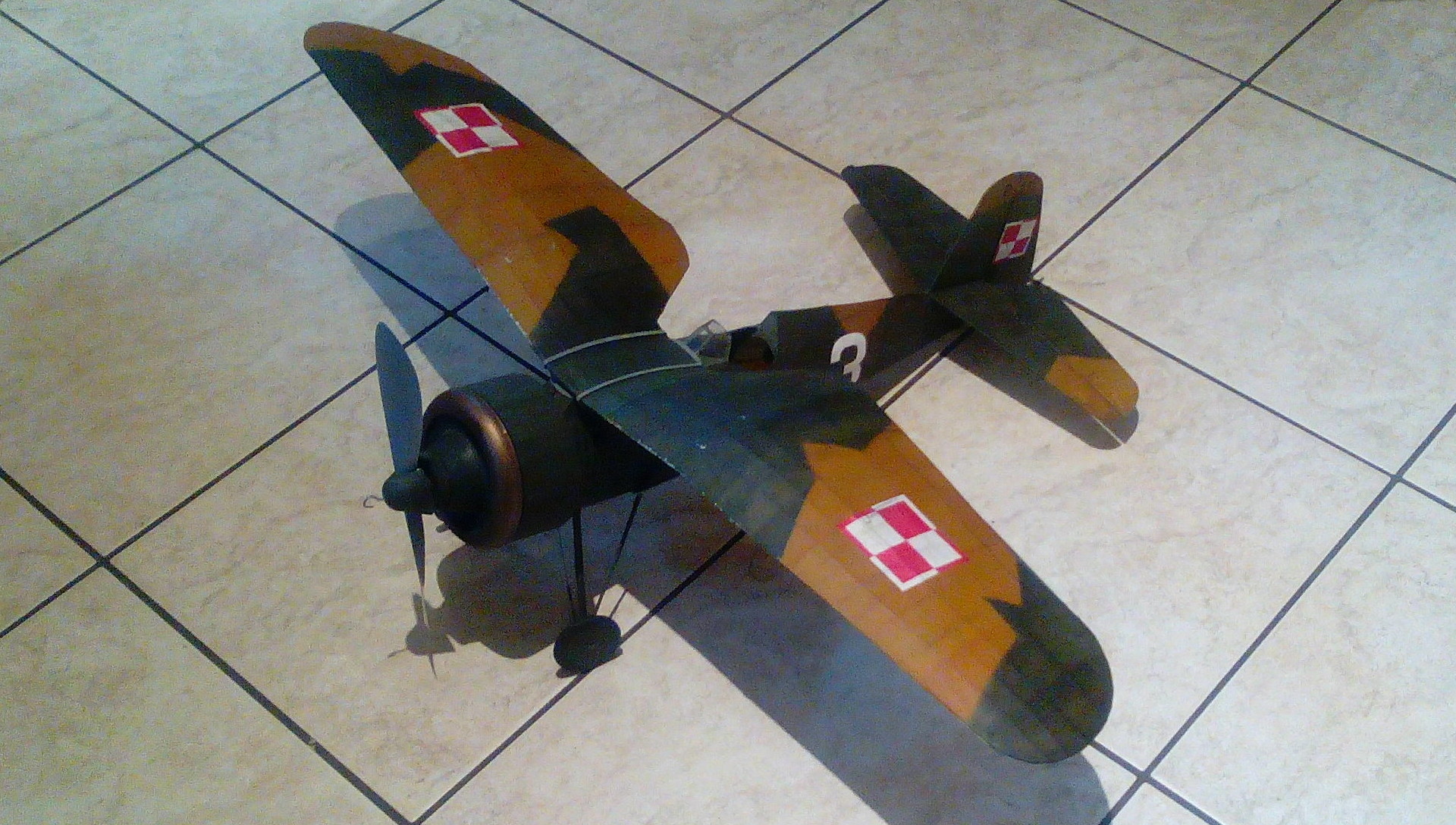
Dumas PZL P11c
Usually this goes the other way, but this model was originally built/altered for R/C and, in 2016, converted to rubber powered. It is set up for a tight right hand turn to avoid hitting walls. Large tabs for wash-out and wash-in are required to keep it from spiralling. .Video
- wingspan: 76cm (30")
- weight: 75 g without rubber
- power: 2 strand of 3/16 inch
- design: Dumas
- built: 2004 (converted to freeflight 2016)
----------------------- | |
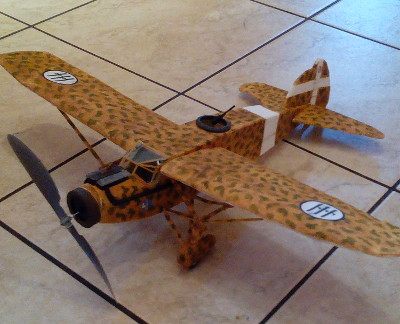
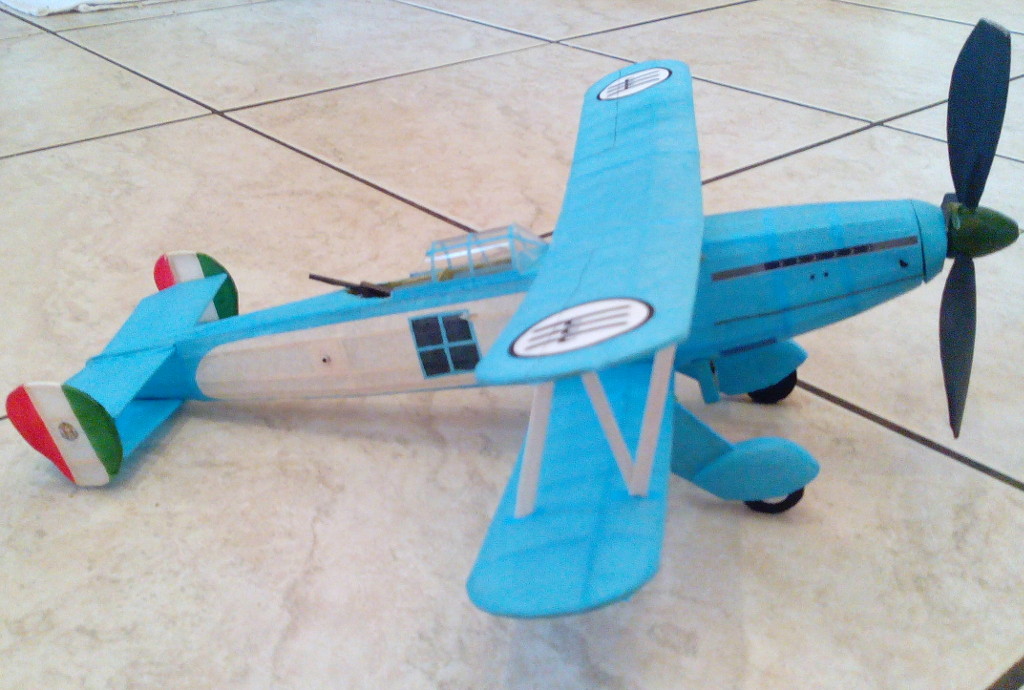
Caproni Ca.111
Another foam model, this one is built from 2mm polystyrene (wall insulation) and a few balsawood spars and bulkheads. The foam bends nicely across one balsa spar to form a very light wing. I painted the model with water thinned Tamiya acrylic paint; the paint spread and adhered well to the foam. The model performs quite nicely. Video
- wingspan: 51 cm (20")
- weight: 27.2 g without rubber
- power: 2 strands of 3 mm
- design: John Cooper
- built: 2016
----------------------- | |
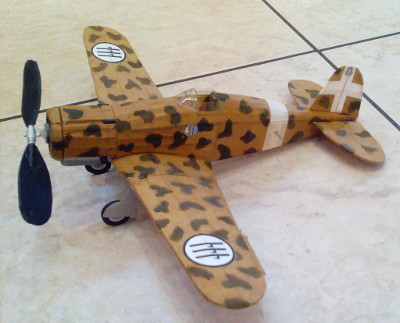
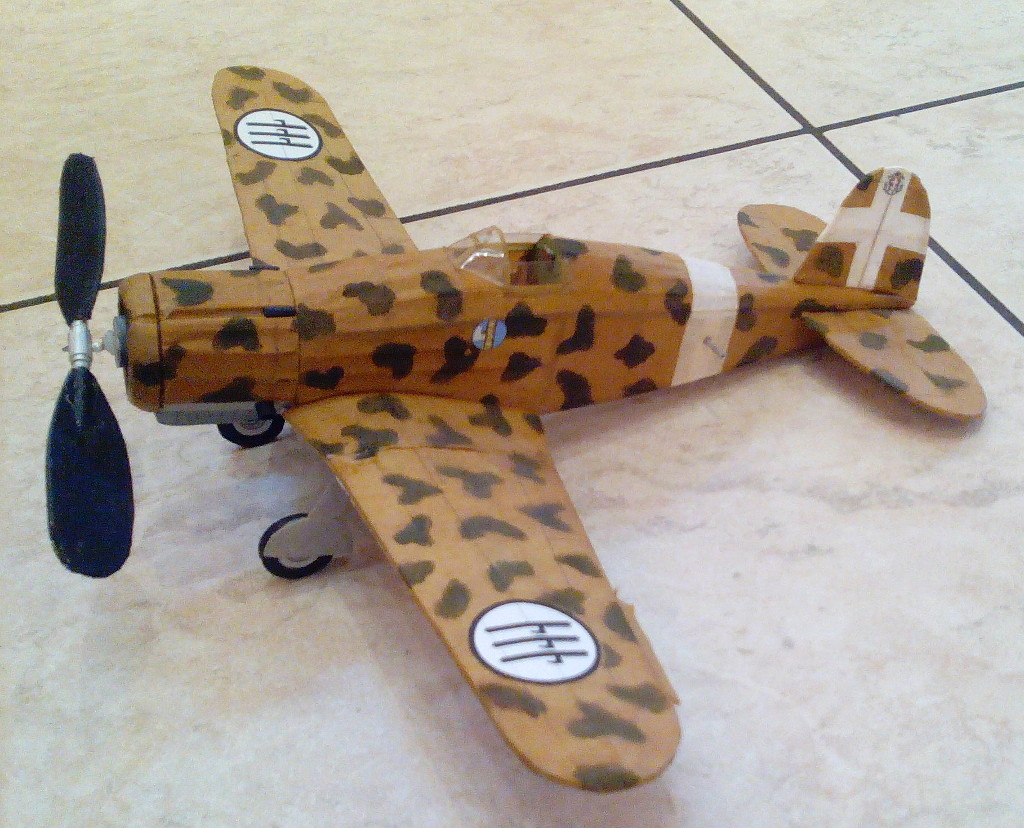
Fiat G.50 Freccia
I was a little worried about getting this model trimmed, with its low wing and scant dihedral. However, I made it slightly nose heavy and used a prop a little smaller than I normally would use. In the end, I was able to trim the model for consistent and stable flights. The plan is available at Outerzone .
- wingspan: 33 cm (13")
- weight: 10.2 g without rubber
- power: 1 strand of 2.5 mm
- design: Mark Fineman
- built: 2016
----------------------- | |
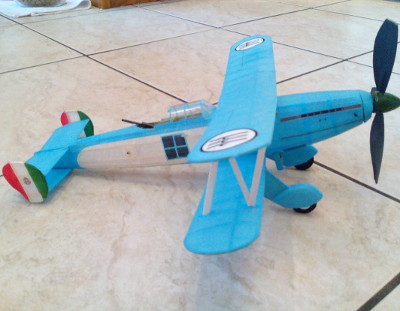
Caproni Ca.134
With its long fuselage, this model is quite a large peanut. The plan is available at Outerzone . Despite the mostly ideal proportions of the model, I am still not getting consistent flights.
- wingspan: 33 cm (13")
- weight: 15.5 g without rubber
- power: 1 strand of 4 mm
- design: Dave Rees
- built: 2016
----------------------- | |
Older
Page 1
Page 2
Page 3
Page 4
Page 5
Page 6
Page 7
jxoxhn.f.cooper@gxmxail.com - remove x's to get email address
| |